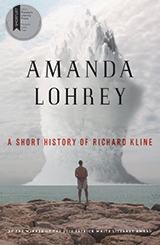
 I mainly enjoyed this book because it was structured in an interesting way and didn’t adhere to the usual patterns of narrative conflict and resolution that seem to dominate contemporary literature, however some of the content frustrated me. The main character’s name is Rick Kline, a guy who basically feels as though he’s ‘special’ or ‘destined for something more’ and his journey to work out what ‘something more’ might be. He tries everything to get over his ennui: relationships with women, traveling, workaholism, psychotherapy, counseling, and finally, meditation. The turning point for Rick is meeting an Indian guru, Sri Mata – a woman who becomes the spiritual centre of his life.
He sounds clichéd, and he is: during the story’s opening chapters. Lohrey does a great job of creating an absolutely infuriating, selfish and entitled man who seems to embody the crisis of contemporary, Western, white masculinity. He speaks about feeling ‘different’ since a young age, as if he were the only person in history to have an existential crisis; he fears becoming a boring, suburban, middle-aged man (a role too common, and not significant or unique enough for him); he speaks about women as though they’re a special race who are totally in tune with themselves and the world (ughhh); his experiences of sex and masturbation are for a while the only things that make him feel as though he is ‘one’ with the universe. Rick does become more sympathetic as his life goes on – he gets married and works hard on his relationship with his wife, even when things go wrong, and he has a son whom he loves.
It’s a slow-paced story, even though it covers the span of a man’s life (or at least the first forty or so years) but it’s not meandering, and still feels driven, as though it has a clear trajectory. The prose is very clear, with a logical feel: it’s still evocative, but I feel it’s designed to reflect the mind of Rick himself who, for a long time, maintains above almost all else that he is rational, reasonable. Formally, the text appears as both memoir and history, with chapters alternating between first and third person narration. I liked stepping in and out of Rick’s mind like this – I felt it encouraged readers to both empathise with him, but also step back and observe and even be critical of him. Continue reading →




 julia tulloh harper