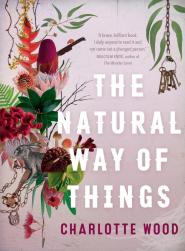
Review – ‘The Natural Way of Things’ by Charlotte Wood

the-natural-way-of-things I did think this dystopian story about young women being punished for sex with powerful men by being relegated to a brutal desert prison was good, but I found it hard to reconcile all the amazing reviews with my own reading experience…another case of being sucked in the by hype before I actually read the book, methinks.

Yolanda is one the girls in the prison (which is actually an abandoned sheep stations, manned by two male guards). I really liked Yolanda’s journey as she became more and more animal, stripping herself of cultural baggage and becoming no more than flesh and bone in a purposeful way (as opposed to a reductive way). The descriptions of her wandering the desolate paddocks slung with rabbit traps, carcasses and skins after she learned to hunt to survive were really powerful, and even though it sounds kind of gross, she was never a figure of horror – more of power and agency.

I also found the shifting power dynamics between the girls and the male guards really compelling, especially the way that Boncer’s ‘power’ could only be enforced by violence and threat (and finally rape), and that his desire for control basically emerged from his fear of the young women.
Continue reading
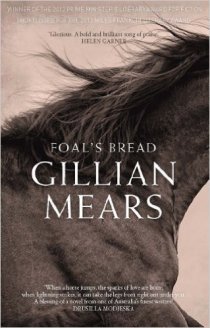
Review – ‘Foal’s Bread’ by Gillian Mears

Foal's Bread

‘Foal’s Bread’ is grim, jubilant, violent, gentle, magical, heartbreaking and uplifting all at the same time. This book has to be destined to become an Australian classic.

Set in the 1910s and 20s, it follows a family of farmers and horse jumpers – mostly Noey, her husband Roley, and her daughter Lainey. The story isn’t plot driven but there is so much going on…Noey losing a baby as a teen to her pedophile uncle, then marrying young, having two kids, keeping a dairy farm going, Roley getting struck by lightning, Noey and Roley’s mum’s volatile relationship…as well as horse training and breeding, anger problems, alcohol problems, weather problems, sex problems, small town problems, the kids growing up, etc. But it all feels really integrated, and the drama of family life becomes complicated and wondrous, validating human experience in even the most mundane, or most upsetting, situations.
Continue reading

Beyoncé exposes deep racism in the USA

Bey at this year's Super Bowl. Photo by Arnie Papp. By Arnie Papp - https://www.flickr.com/photos/apapp/24922759281/, CC BY 2.0, https://commons.wikimedia.org/w/index.php?curid=46989304

Bey at this year’s Super Bowl. Photo by Arnie Papp.

A couple of weeks ago at the Super Bowl, Beyoncé performed part of her new track, ‘Formation’, during the half time show, and has since garnered aggressive criticism for being racist and hateful– in other words, raising the issue of racism in a way that has offended some white Americans by drawing attention to their complicity in it.

Continue reading

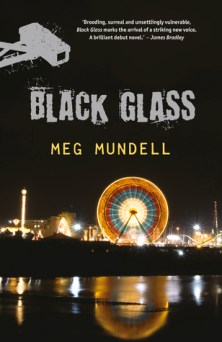
‘Black Glass’ – Meg Mundell

BlackGlass

This is a dystopian novel set in Melbourne which I thought was such a great idea. There are so many dystopian stories set in the States or in totally invented worlds, so it was really nice to read something Aussie, that included great descriptions of the drought-infested north of Victoria, as well as the ‘casino district’ on the Yarra in the city, and the devastation of the Docklands precinct which (unsurprisingly, perhaps) becomes abandoned and derelict.

Continue reading

Amanda Lohrey – ‘A Short History of Richard Kline’

Richard-KlineI mainly enjoyed this book because it was structured in an interesting way and didn’t adhere to the usual patterns of narrative conflict and resolution that seem to dominate contemporary literature, however some of the content frustrated me. The main character’s name is Rick Kline, a guy who basically feels as though he’s ‘special’ or ‘destined for something more’ and his journey to work out what ‘something more’ might be. He tries everything to get over his ennui: relationships with women, traveling, workaholism, psychotherapy, counseling, and finally, meditation. The turning point for Rick is meeting an Indian guru, Sri Mata – a woman who becomes the spiritual centre of his life.

He sounds clichéd, and he is: during the story’s opening chapters. Lohrey does a great job of creating an absolutely infuriating, selfish and entitled man who seems to embody the crisis of contemporary, Western, white masculinity. He speaks about feeling ‘different’ since a young age, as if he were the only person in history to have an existential crisis; he fears becoming a boring, suburban, middle-aged man (a role too common, and not significant or unique enough for him); he speaks about women as though they’re a special race who are totally in tune with themselves and the world (ughhh); his experiences of sex and masturbation are for a while the only things that make him feel as though he is ‘one’ with the universe. Rick does become more sympathetic as his life goes on – he gets married and works hard on his relationship with his wife, even when things go wrong, and he has a son whom he loves.

It’s a slow-paced story, even though it covers the span of a man’s life (or at least the first forty or so years) but it’s not meandering, and still feels driven, as though it has a clear trajectory. The prose is very clear, with a logical feel: it’s still evocative, but I feel it’s designed to reflect the mind of Rick himself who, for a long time, maintains above almost all else that he is rational, reasonable. Formally, the text appears as both memoir and history, with chapters alternating between first and third person narration. I liked stepping in and out of Rick’s mind like this – I felt it encouraged readers to both empathise with him, but also step back and observe and even be critical of him. Continue reading

‘The book that made me feel’

Last week I wrote a piece on Cormac McCarthy’s The Road for The Writers Bloc blog. You can read it here! It’s about how the book creates a strong mood and sense of feeling (aka a sense of devastation). Here is a picture of Viggo Mortenson from the film adaptation which also encapsulates how I felt after reading the novel for the first time (and every other time after that). Enjoy!

2009-11-09-0viggotheroad

KYD Panel Success

JulesKYD

Photo taken by the lovely Meaghan JR Young.

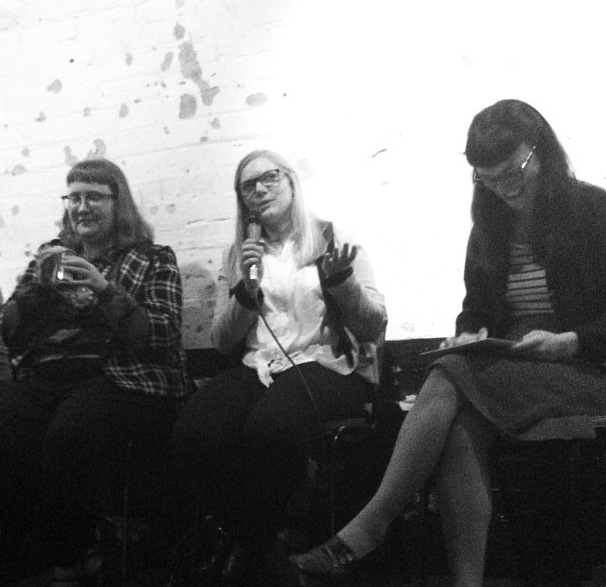
Here’s a photo of me from three weeks ago at the 2013 Emerging Writer’s Festival (EWF), taking part in the TV Night with Kill Your Darlings – a panel session about TV criticism which was hosted as part of the “Late Night Lit Mag” series. I am, in this picture, rockin’ out with host Steph Van Schilt, former Online Assistant Editor at KYD and current Deputy Editor at The Lifted Brow (right) and Mel Campbell, author of Out of Shape (left). Aussie writers Luke Ryan and Rochelle Siemienowicz were also on the panel. Much fun was had, and Doctor Who was mentioned (several times). A wrap-of the evening can be read here at the EWF Blog.